The pace of technological change is accelerating, blurring the line between science fiction and real-world deployment. For professionals and business leaders, the real challenge isn’t awareness—it’s identifying which breakthrough technologies 2026 will genuinely reshape operations, infrastructure, and competitive advantage.
This article delivers a focused, actionable overview of four innovations reaching critical inflection points. Drawing on current industry data, emerging deployment trends, and expert technology forecasts, we cut through hype to highlight what’s moving from pilot programs to scalable adoption.
If you’re looking for clarity on which advancements will redefine productivity and digital interaction in the near term, this roadmap is built to guide your next strategic move.
Beyond the Hype: Generative AI Gets to Work
By 2026, Generative AI will trade its party tricks for a day job. The era of chatbots that can write poems about your cat (impressive, but niche) is giving way to specialized AI models—systems trained for a defined, high‑value task rather than everything under the sun. Think less “jack of all prompts,” more precision instrument.
In software development, small proprietary models will handle automated code generation, bug detection, and documentation. In medicine, AI tuned for diagnostic imaging will flag anomalies in X‑rays and MRIs, acting as a second set of eyes (the kind that never needs coffee). Marketing teams will deploy models that build hyper‑personalized campaigns at scale—because “Dear Customer” just doesn’t cut it anymore.
Some skeptics argue this is overhyped—that humans will always outperform machines in creative and clinical work. Fair point. But the shift isn’t about replacement; it’s about augmentation. When AI drafts, analyzes, and assembles, humans refine, decide, and innovate. Batman still drives the Batmobile, after all.
The real leap forward is multimodality—AI systems that seamlessly generate text, images, audio, and video in one workflow. Creating multimedia assets from a single prompt will become embedded in everyday software, a hallmark of breakthrough technologies 2026.
Expect practical gains:
- Faster production cycles
- Lower operational costs
- Expanded creative experimentation
The hype cycle is fading. Utility is clocking in.
Computing at the Source: The Rise of the Intelligent Edge
The centralized cloud model is hitting a wall. When every sensor ping, camera frame, and biometric reading must travel to a distant data center, latency (the delay between sending and receiving data) becomes the enemy. In mission‑critical systems, milliseconds matter.
Edge computing—processing data at or near its source—solves this bottleneck. Instead of shipping raw data across the globe, devices analyze it locally and send only what’s necessary upstream. Think autonomous vehicles braking in real time without waiting for cloud approval, or factory sensors predicting equipment failure before a costly shutdown. (No one wants a robot arm freezing mid-assembly.)
Some argue cloud infrastructure is already fast and scalable enough. And yes, hyperscale providers have made staggering advances. But applications like augmented reality overlays, remote surgery, and smart traffic grids demand near-instant feedback. Physics alone limits how fast data can travel. The edge isn’t a trend—it’s a practical response.
Here’s what I recommend:
- Adopt hybrid architectures: Keep heavy analytics in the cloud, but push time-sensitive workloads to the edge.
- Prioritize on-device AI chips for real-time inference (local AI decision-making without cloud calls).
- Audit latency-sensitive workflows now before scaling IoT deployments.
Pro tip: Start with pilot deployments in high-impact areas like predictive maintenance to prove ROI quickly.
As breakthrough technologies 2026 reshape infrastructure, intelligent edge systems will become the default backbone of responsive, resilient digital ecosystems. For deeper innovation scouting, explore how to track emerging startups before they go mainstream.
Powering the Future: Breakthroughs in Energy Storage
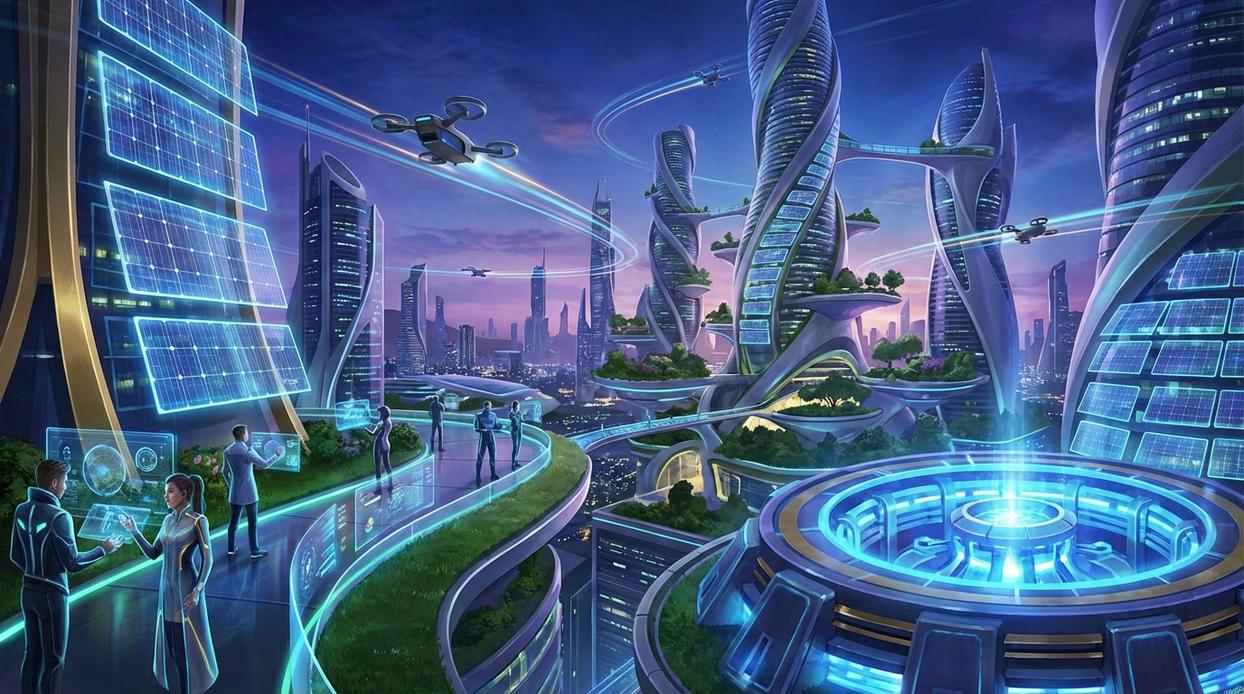
For years, the hum of progress in electric vehicles and renewable energy has been accompanied by a quiet frustration: lithium-ion batteries can only take us so far. You can almost feel the constraint in the warm weight of a phone that drains too quickly or hear it in the cautious optimism around EV range estimates. However, that ceiling is beginning to crack.
By 2026, the first commercially viable solid-state batteries are expected to move from lab benches to production lines, signaling one of the most important breakthrough technologies 2026 will deliver. Unlike traditional batteries that rely on a flammable liquid electrolyte (the medium that moves charged particles between a battery’s electrodes), solid-state designs use a solid material instead. The result? Higher energy density—meaning longer driving ranges and devices that last noticeably longer between charges—along with dramatically faster charging times and improved safety.
Critics argue lithium-ion still has room to improve and remains cheaper to produce. That’s fair. Yet solid-state technology promises a leap, not a tweak. Fewer overheating risks and greater stability could make battery fires far rarer (a welcome change for anyone who has smelled burnt electronics).
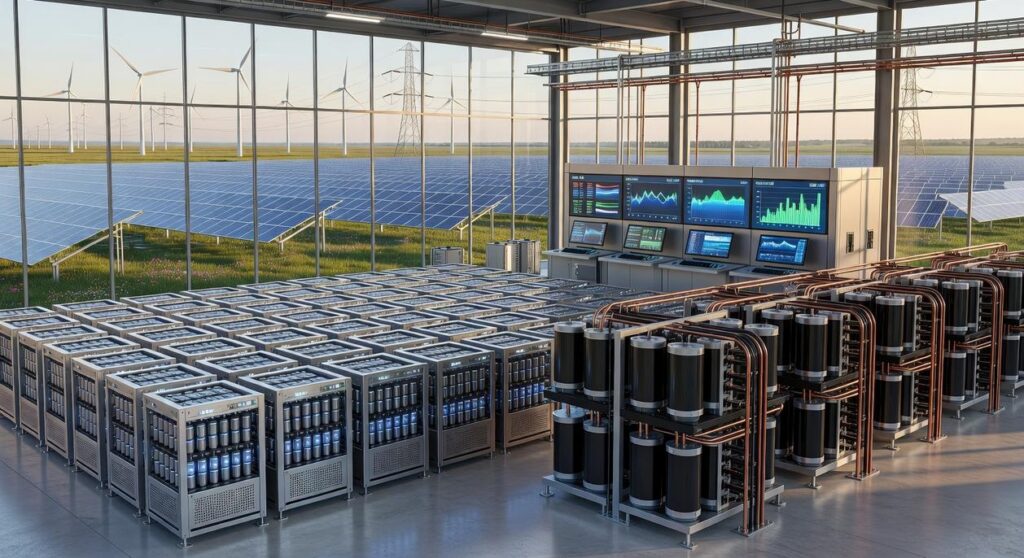
Moreover, the implications stretch far beyond personal gadgets. On a grid scale, solid-state storage could quietly stockpile solar energy captured at noon and release it after sunset, smoothing the flicker of renewables into a steady, reliable current.
Digital Worlds, Real Impact: Spatial Computing Comes of Age
By 2026, the metaverse conversation won’t be about cartoonish avatars or virtual dance floors. Instead, it will pivot toward professional-grade spatial computing—technology that blends digital content with the physical environment in real time. In simple terms, spatial computing allows computers to understand space the way humans do, placing interactive 3D data directly into your field of view.
Consider the difference: VR headsets vs. AR glasses. Virtual reality (VR) immerses you in a fully digital world—great for gaming, but isolating. Augmented reality (AR) glasses, on the other hand, layer digital information onto the real world. One replaces reality; the other enhances it. For productivity, enhancement wins.
For example, engineers can manipulate a life-sized 3D jet engine midair, rotating components collaboratively as if Tony Stark loaned them a lab. Surgeons can overlay MRI scans and real-time vitals directly onto a patient during procedures. In both cases, digital precision meets physical action—reducing errors and accelerating decisions (and yes, seconds matter in surgery).
Critics argue AR hardware is still bulky and distracting. That’s fair. Early devices felt like prototypes strapped to your face. However, advances in lightweight optics, edge computing, and battery efficiency are closing that gap fast, making these tools practical rather than experimental.
Among breakthrough technologies 2026 will spotlight, spatial computing stands apart—not as entertainment, but as infrastructure for safer, faster, and more precise hands-on work.
Preparing for the Breakthrough Technologies 2026 Era
The convergence of AI, decentralized systems, advanced energy, and immersive interfaces isn’t theoretical—it’s accelerating now. You came here to understand where the next wave is headed, and now you can see how these forces connect and why waiting on the sidelines is the real risk.
The biggest pain point? Falling behind while competitors adopt faster, smarter systems. breakthrough technologies 2026 will reward those who experiment early and adapt quickly.
Act now: start testing one emerging tool in your workflow this month, audit your tech stack for gaps, and stay plugged into trusted innovation insights. Join the #1 rated tech trends platform for real-time alerts and practical guidance—subscribe today and stay ahead of the curve.
 Content & Productivity Strategist
Ask Jimmy Fowlericimo how they got into doxfore edge computing insights and you'll probably get a longer answer than you expected. The short version: Jimmy started doing it, got genuinely hooked, and at some point realized they had accumulated enough hard-won knowledge that it would be a waste not to share it. So they started writing.
What makes Jimmy worth reading is that they skips the obvious stuff. Nobody needs another surface-level take on Doxfore Edge Computing Insights, Expert Insights, Innovation Alerts. What readers actually want is the nuance — the part that only becomes clear after you've made a few mistakes and figured out why. That's the territory Jimmy operates in. The writing is direct, occasionally blunt, and always built around what's actually true rather than what sounds good in an article. They has little patience for filler, which means they's pieces tend to be denser with real information than the average post on the same subject.
Jimmy doesn't write to impress anyone. They writes because they has things to say that they genuinely thinks people should hear. That motivation — basic as it sounds — produces something noticeably different from content written for clicks or word count. Readers pick up on it. The comments on Jimmy's work tend to reflect that.
Content & Productivity Strategist
Ask Jimmy Fowlericimo how they got into doxfore edge computing insights and you'll probably get a longer answer than you expected. The short version: Jimmy started doing it, got genuinely hooked, and at some point realized they had accumulated enough hard-won knowledge that it would be a waste not to share it. So they started writing.
What makes Jimmy worth reading is that they skips the obvious stuff. Nobody needs another surface-level take on Doxfore Edge Computing Insights, Expert Insights, Innovation Alerts. What readers actually want is the nuance — the part that only becomes clear after you've made a few mistakes and figured out why. That's the territory Jimmy operates in. The writing is direct, occasionally blunt, and always built around what's actually true rather than what sounds good in an article. They has little patience for filler, which means they's pieces tend to be denser with real information than the average post on the same subject.
Jimmy doesn't write to impress anyone. They writes because they has things to say that they genuinely thinks people should hear. That motivation — basic as it sounds — produces something noticeably different from content written for clicks or word count. Readers pick up on it. The comments on Jimmy's work tend to reflect that.