
Staying ahead in today’s fast-moving tech landscape isn’t just about curiosity—it’s about knowing which innovations will actually shape the way we live and work. If you’re searching for clear, reliable insights into emerging technologies, smarter devices, edge computing breakthroughs, productivity strategies, and green tech innovations, this article is built for you.
The pace of change can feel overwhelming. New tools launch daily, buzzwords spread quickly, and it’s hard to tell what’s transformative versus what’s temporary hype. That’s why this piece cuts through the noise. We analyze current tech trends, highlight practical applications, and connect them directly to real-world impact—so you can make informed decisions, whether you’re a professional, enthusiast, or decision-maker.
Our insights are grounded in ongoing industry monitoring, expert commentary, and up-to-date market analysis. By the end of this article, you’ll have a clearer view of the technologies gaining traction, the opportunities they present, and how to leverage them effectively.
The Green Revolution 2.0 is not about distant prototypes; rather, it’s about deployable systems reshaping energy, food, water, and cities. While competitors spotlight splashy startups, we focus on overlooked advantages: integration, scalability, and edge intelligence.
- Grid-aware solar paired with AI forecasting cuts curtailment and boosts ROI.
- Precision fermentation slashes land use compared to livestock (FAO).
- Atmospheric water harvesters now operate below 30% humidity.
- Modular carbon capture turns waste CO2 into building materials.
Moreover, these green tech innovations converge, compounding impact. In short, sustainability’s edge belongs to solutions that talk to each other. That’s the real moat.
Next-Generation Energy: Powering a Cleaner Tomorrow
The race to decarbonize isn’t just about adding more solar panels—it’s about upgrading the entire system.
Green Hydrogen Production uses electrolysis, a process that splits water (H2O) into hydrogen and oxygen using electricity. When powered by renewables, it creates hydrogen without carbon emissions. This fuel can decarbonize heavy industries like steel and cement, and long-haul transport where batteries fall short. Recent breakthroughs—such as improved electrolyzer efficiency and scaled manufacturing—have cut costs significantly (IEA, 2023). If you’re evaluating future-facing sectors, prioritize regions investing in hydrogen hubs and infrastructure.
Advanced Geothermal Systems (AGS) differ from traditional geothermal, which depends on rare natural reservoirs. AGS drills deep, engineered wells to access Earth’s heat almost anywhere. Thanks to innovations adapted from oil and gas drilling—like horizontal drilling and enhanced reservoir stimulation—AGS can provide steady baseload power (continuous electricity supply). Recommendation: watch pilot projects proving scalability before backing large deployments.
Small Modular Reactors (SMRs) represent next-gen nuclear fission. These compact reactors use passive safety systems (cooling mechanisms that work without human intervention) and standardized designs for faster construction. They offer stable grid power, balancing intermittent renewables like wind and solar (U.S. DOE, 2024). If grid reliability concerns you, SMRs deserve serious consideration.
The smartest move? Diversify across these green tech innovations rather than betting on one breakthrough. The cleaner tomorrow won’t be powered by a single silver bullet—it’ll be a portfolio.
The Digitized Circular Economy: Eliminating Waste with AI
AI-Powered Recycling
First, let’s define a Material Recovery Facility (MRF): a plant where recyclables are sorted, cleaned, and prepared for reuse. Traditionally, humans did most of this work. Now, computer vision (AI that “sees” through cameras) and robotics identify plastics by polymer type in milliseconds. As a result, facilities achieve higher purity rates and recover materials once considered unrecyclable.
Practical tip: If you manage waste for a business, request contamination reports from your local MRF. Then adjust on-site sorting to match their AI detection standards.
| Technology | What It Does | Real-World Impact |
|---|---|---|
| Computer Vision | Identifies materials by shape and resin code |
Reduces contamination |
| Robotic Arms | Sorts at high speed | Boosts recovery rates |
Blockchain for Supply Chains
Meanwhile, blockchain—an immutable digital ledger—tracks products from raw material to end-of-life. For example, a coffee brand can verify sustainable sourcing and prove ethical labor practices. In turn, consumers scan a QR code and confirm origins instantly.
Action step: Pilot a batch-level tracking system before scaling company-wide.
Bio-Manufacturing and Advanced Materials
Finally, bio-manufacturing uses algae-based or cornstarch plastics to replace petroleum inputs. Lab-grown leather reduces livestock dependence (and the methane problem). These green tech innovations close loops instead of widening them.
Start small: swap one packaging line to biodegradable inputs, measure lifecycle costs, then expand strategically.
Smart Systems: Using Data to Minimize Our Footprint
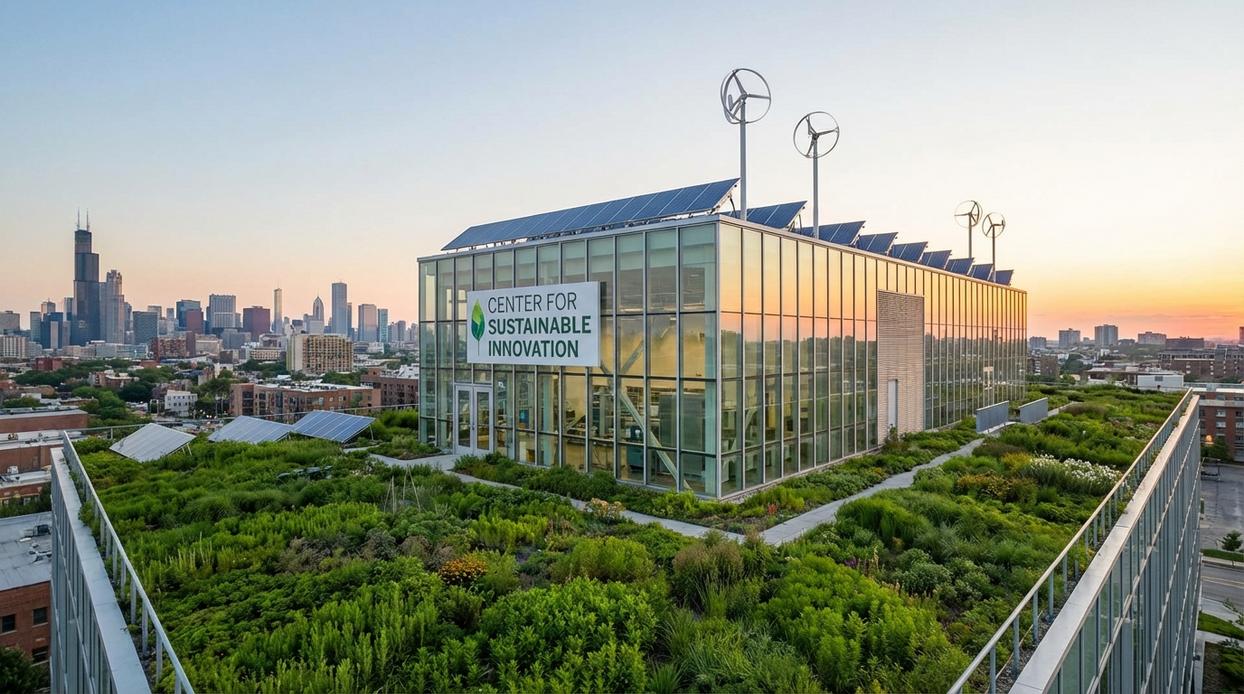
At first glance, “smart systems” can sound abstract. In simple terms, they’re connected technologies that collect data, analyze it, and automatically adjust operations to reduce waste. In other words, they help us do more with less.
Precision Agriculture
Consider precision agriculture. This approach uses drones, IoT (Internet of Things) sensors, and edge computing—data processing that happens near the source instead of in a distant cloud—to monitor soil moisture, nutrient levels, and pest activity in real time. Instead of watering or fertilizing an entire field uniformly, farmers can apply resources only where needed. As a result, water use drops and chemical runoff is minimized. Some critics argue the technology is expensive or complex. That’s fair. However, reduced input costs and higher yields often offset the investment over time (and fewer wasted resources is a win for everyone).
Intelligent Grids and Energy Storage
Similarly, intelligent grids use AI to balance electricity supply and demand. When renewable sources like solar or wind fluctuate, AI systems redistribute loads instantly. Advances in battery technology—such as solid-state and sodium-ion batteries—store excess energy safely and release it when needed. Without storage, renewables would remain unreliable; with it, they become practical pillars of green tech innovations.
Smart Building Management
Meanwhile, smart building systems rely on occupancy and climate sensors to adjust HVAC and lighting automatically. By responding to real-world conditions, commercial buildings can cut energy consumption by up to 30% (U.S. Department of Energy). For a deeper look at how these systems fit into broader change, see the evolving tech landscape whats driving digital transformation today.
Carbon Capture and Utilization (CCU): Turning a Liability into an Asset
Direct Air Capture (DAC) uses massive fans and chemical sorbents to pull CO2 from ambient air. The International Energy Agency reports over 30 commercial DAC plants operating globally in 2024, capturing thousands of tons annually (IEA).
The real leap is Carbon-to-Value Technology, transforming emissions into assets:
- CO2-cured concrete that strengthens while storing carbon
- Plastics and polymers synthesized from captured gas
- Carbon-neutral synthetic fuels for aviation
Companies like CarbonCure show concrete can lock away CO2 permanently, proving green tech innovations can scale. See research from IEA report and investors.
Change is no longer theoretical; it’s measurable. In 2023, renewable energy accounted for nearly 30% of global electricity generation (IEA), proving sustainable systems scale. Likewise, smart thermostats cut household energy use by up to 15% (U.S. DOE), turning efficiency into savings. These green tech innovations work because they align profit with responsibility. However, skeptics argue individual actions barely matter. Yet consumer demand has pushed EV sales past 14 million annually (IEA), reshaping markets. Therefore, support responsible brands, advocate smart policy, and adopt efficient tools at home. Small shifts, multiplied, drive systemic transformation. Momentum builds faster than most people expect today.
Where Innovation Meets Action
You came here to make sense of today’s fast-moving tech landscape — from emerging trends and smart devices to edge computing and productivity breakthroughs. Now you have a clearer view of how these forces connect and how they can work in your favor.
The real challenge isn’t access to information. It’s knowing which signals matter and how to act before the opportunity passes. Falling behind on green tech innovations, next-gen devices, or edge-powered solutions doesn’t just slow progress — it costs you efficiency, growth, and competitive edge.
The next step is simple: stay informed, stay agile, and apply what you’ve learned. Track innovation alerts, evaluate practical tech solutions for your workflow, and prioritize tools that drive measurable results.
If you’re ready to stay ahead instead of playing catch-up, start leveraging trusted insights and proven tech analysis today. Join thousands of forward-thinking readers who rely on us for cutting-edge updates and actionable strategies. Don’t wait for disruption to force your move — take control now.