Shopping online often feels cold, right? You click a button, the transaction is done, and you’re left with zero connection. It’s like wandering a generic retail floor.
That disconnect isn’t just annoying (it’s) a wasted opportunity. Customers crave more than just a ‘Buy’ button. They want immersive shopping experiences that speak to them personally.
Here’s where augmented reality retail comes in. We’ve dug deep into how emerging technologies are reshaping consumer behavior.
Why should you care? Well, those who adapt will thrive. Imagine offering your customers a shopping journey they won’t forget.
This article will show you how to bridge that gap. You’ll walk away with clear takeaways into the technologies making headlines, real-world examples, and a peek into the retail future. Ready to dive in?
Immersive Shopping: Beyond Virtual Reality
Immersive shopping isn’t just about slapping on a VR headset and calling it a day. It’s more about blending the digital and physical worlds into something actually useful. Think of it like augmented reality retail that transforms shopping from a chore into a tailored experience.
Traditional e-commerce? Flat and transactional. You scroll, you click, you wonder if that sweater is really “burgundy” or just dark red.
And brick-and-mortar? Limited by space and inventory. But immersive shopping changes the game, breaking those boundaries.
At its core, immersion involves personalization. You know, AI-driven recommendations that seem to read your mind. Then there’s interaction.
Virtual try-ons and 3D models that let you see how that couch looks in your actual living room (or at least in a room like yours). Sensory engagement just seals the deal with haptics and spatial audio. Imagine walking into a store that knows you better than your favorite barista does.
Why do brands bother with all these techy bells and whistles? Simple. It’s about making buying feel effortless.
Reducing friction so you don’t second-guess every purchase. It builds confidence and, more importantly, emotional connections with the brand.
Ever looked at a flat product photo and sighed? Compare that to a fully interactive 3D model spinning right in front of you. That’s the real magic.
For those keeping an eye on emerging tech trends healthcare, you’ll see parallels. It’s about tech that makes life smoother, richer, and just better all around.
Unlocking Retail Magic: Tech That Transforms Shopping
Augmented & Virtual Reality (AR/VR)
Let’s get straight to it. Augmented reality (AR) and virtual reality (VR) are game changers in retail. AR overlays digital stuff on the real world.
Imagine using your phone to see how a couch fits in your living room. On the other hand, VR immerses you in a completely digital environment. Think of walking through a virtual showroom without leaving your couch.
Want to see how AR is transforming shopping? Check out these 5 new examples of augmented reality in retail.
Artificial Intelligence (AI) and Machine Learning (ML)
AI is more than a buzzword; it’s the backbone of personalized shopping. It powers those hyper-relevant product suggestions you see online. Ever wonder how your virtual shopping assistant seems to understand you?
That’s AI and ML at work. They analyze your behavior and preferences to make shopping as personal as it gets. It’s the kind of tech that makes you feel understood without saying a word.
Internet of Things (IoT) and Smart Devices
IoT is weaving a web of connectivity in stores. Smart mirrors, in-store sensors, and digital signage are creating environments that respond to you. Imagine a mirror that shows you an outfit in different colors without needing to change.
That’s not sci-fi; that’s smart retail. These devices are turning stores into changing spaces that react to your needs in real time.
Now, you might wonder how all these technologies work together. It’s simple. They create a smooth shopping journey.
No more isolated tech gimmicks. You’re moving through a connected retail space where AR/VR, AI, and IoT blend into one solid experience. This is the future of augmented reality retail.
It’s not just tech for tech’s sake. It’s tech that enhances how we shop.
Immersive Shopping in Action: Bold Moves by Leading Brands
Augmented reality retail is changing the game. Let’s start with something close to home (literally.) Imagine a furniture brand that has mastered the art of augmented reality. You whip out your phone and scan your living room.
Instantly, you see that new sofa perfectly placed in your space. No more guessing if it fits or matches your decor. This isn’t just a neat trick.
It’s a solution to a common problem: reducing returns. Fewer headaches for you, less waste for them. Brilliant, right?
Now, picture stepping into a car dealership. But wait, the car you want isn’t in stock. No problem.
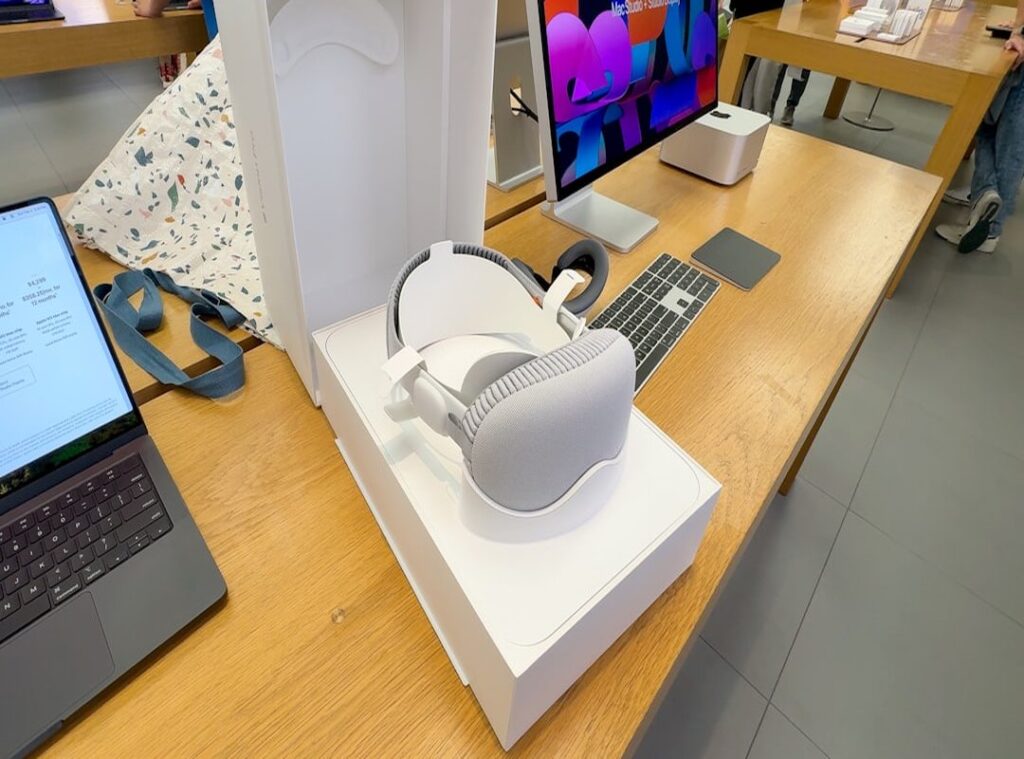
A VR headset lets you explore every detail of your dream ride. You can configure it to your specifications, seeing it all in vivid detail. Talk about a showroom that breaks the physical barrier.
Customers get the full experience without the inventory. How does this help business? It keeps potential buyers hooked and boosts sales.
Let’s not forget fashion and beauty. Ever tried on makeup in a store and found the lighting all wrong? Enter the magic mirror (a) clever AI-powered tool.
It considers lighting, skin tone, and even body shape. You get an accurate preview of the product. This tech removes doubts about what suits you best.
Guess what that means? Higher conversion rates and happier customers.
These examples show how brands are using technology to boost shopping. They’re not just keeping up; they’re leading. And if you’re curious about more innovations, check out these breakthroughs green tech know.
It’s fascinating to see how tech is driving retail forward.
The Next Frontier: Edge Computing’s Role in Immersion
Edge computing is the secret ingredient for future immersive experiences. Why? It processes data locally, right on or near your device, instead of sending it off to some distant cloud.
This means no more lag when you’re trying on virtual clothes in augmented reality retail. How annoying is it when the image stutters just as you’re about to make a decision?
Think about smart mirrors in retail stores. They need to respond instantly, showing you how that new jacket looks without you waiting around. Edge computing makes this happen.
It handles complex calculations on the spot, so you don’t need a super-fast internet connection or a top-tier device.
This tech is the solution to the bottlenecks we’ve been stuck with. It’s making immersive tech more accessible and reliable for both consumers and businesses. If companies want to lead in customer experience, this is the trend to watch.
Seriously, who wouldn’t want to stay ahead?
Pro tip: Keep an eye on how fast this tech integrates into everyday devices. It’ll sneak up on you. The future of augmented reality retail isn’t just coming.
It’s already here, reshaping how we interact with the digital world.
Dive into the Future of Retail
You’re frustrated. Shopping feels robotic, doesn’t it? But we don’t have to settle for bland experiences.
Immersive shopping, powered by tech like AR and edge computing, flips the script. It builds trust, sparks excitement. It’s not sci-fi; it’s now, unfolding in augmented reality retail.
Think about your store. Where does the customer journey falter? Identify that weak spot.
Boost it with immersive tech. It’s about transforming the mundane into magical. Start small, test, adapt.
Raise your retail game.
We’re rewriting retail. Ready to step up? Explore immersive solutions today.
Don’t just browse (believe.)
 Founder & Chief Innovation Officer
There is a specific skill involved in explaining something clearly — one that is completely separate from actually knowing the subject. Ythran Draymond has both. They has spent years working with innovation alerts in a hands-on capacity, and an equal amount of time figuring out how to translate that experience into writing that people with different backgrounds can actually absorb and use.
Ythran tends to approach complex subjects — Innovation Alerts, Smart Devices and Solutions, Tech Landscapes and Trends being good examples — by starting with what the reader already knows, then building outward from there rather than dropping them in the deep end. It sounds like a small thing. In practice it makes a significant difference in whether someone finishes the article or abandons it halfway through. They is also good at knowing when to stop — a surprisingly underrated skill. Some writers bury useful information under so many caveats and qualifications that the point disappears. Ythran knows where the point is and gets there without too many detours.
The practical effect of all this is that people who read Ythran's work tend to come away actually capable of doing something with it. Not just vaguely informed — actually capable. For a writer working in innovation alerts, that is probably the best possible outcome, and it's the standard Ythran holds they's own work to.
Founder & Chief Innovation Officer
There is a specific skill involved in explaining something clearly — one that is completely separate from actually knowing the subject. Ythran Draymond has both. They has spent years working with innovation alerts in a hands-on capacity, and an equal amount of time figuring out how to translate that experience into writing that people with different backgrounds can actually absorb and use.
Ythran tends to approach complex subjects — Innovation Alerts, Smart Devices and Solutions, Tech Landscapes and Trends being good examples — by starting with what the reader already knows, then building outward from there rather than dropping them in the deep end. It sounds like a small thing. In practice it makes a significant difference in whether someone finishes the article or abandons it halfway through. They is also good at knowing when to stop — a surprisingly underrated skill. Some writers bury useful information under so many caveats and qualifications that the point disappears. Ythran knows where the point is and gets there without too many detours.
The practical effect of all this is that people who read Ythran's work tend to come away actually capable of doing something with it. Not just vaguely informed — actually capable. For a writer working in innovation alerts, that is probably the best possible outcome, and it's the standard Ythran holds they's own work to.