

Cyber threats are evolving faster than most organizations can adapt. If you’re searching for reliable cybersecurity threat forecasts, you likely want clear, actionable insights—not vague predictions or recycled headlines. This article delivers exactly that.
We break down emerging attack patterns, shifting threat actor tactics, vulnerabilities in smart devices and edge environments, and the technologies shaping modern defense strategies. Whether you’re an IT leader, security professional, or tech-forward decision-maker, you’ll gain a forward-looking view of the risks most likely to impact your systems and data.
Our analysis is grounded in current threat intelligence reports, industry research, and real-world breach investigations to ensure accuracy and relevance. Instead of speculation, we focus on documented trends, measurable risk indicators, and practical mitigation strategies.
By the end, you’ll understand what’s coming next in the threat landscape—and how to prepare before vulnerabilities turn into costly incidents.
Traditional cybersecurity is like patching a sinking ship—reactive, frantic, and ultimately unsustainable. Meanwhile, AI-driven malware, sprawling IoT networks (Internet of Things devices connected online), and edge computing expand the attack surface—the total number of entry points attackers can exploit.
To stay ahead, you need a predictive strategy built on:
- Real-time behavioral analytics that flag anomalies before damage spreads.
- Integrated threat intelligence platforms that translate data into cybersecurity threat forecasts.
- Automated response playbooks that isolate risks in seconds.
Admittedly, some argue firewalls and endpoint tools are enough. However, layered prediction turns raw signals into foresight—and foresight into resilience.
The Paradigm Shift: From Digital Walls to Predictive Intelligence
Back in 2019, many organizations still believed a reinforced “digital wall” was enough. Firewalls (network barriers that filter traffic), antivirus tools, and signature-based detection (security that matches known malware code patterns) formed the standard defense stack. However, as zero-day exploits—previously unknown vulnerabilities—and polymorphic malware that constantly rewrites its code became mainstream by the early 2020s, cracks in that wall grew obvious. In other words, defenses built for yesterday’s threats struggled against attacks that mutate in real time.
Critics argue layered traditional security still works if properly maintained. And to a degree, that’s true (patching alone blocks many routine attacks, according to CISA reports). Yet waiting for a signature update after damage begins is like installing storm shutters after the roof lifts off.
That’s where threat forecasting comes in. Defined simply, it’s the strategic practice of collecting data, identifying patterns, and modeling future attack vectors. Much like meteorology tracks storms before landfall, cybersecurity threat forecasts analyze signals early to predict impact.
As a result, organizations can:
- Allocate security budgets more effectively
- Prioritize high-risk vulnerabilities
- Disrupt attack chains before execution
Ultimately, prediction shifts security from reactive cleanup to proactive disruption.
AI-Powered Offensive Capabilities
Artificial intelligence is no longer just a defensive tool; it’s becoming a weapon. Threat actors now use machine learning—systems that improve automatically from data—to craft hyper-realistic phishing emails that mirror tone, timing, and even writing quirks. Some argue AI is overhyped in cybercrime, claiming most attacks still rely on basic social engineering. However, recent cybersecurity threat forecasts suggest automation is accelerating both scale and precision (IBM Security, 2024). AI-driven tools can scan codebases for vulnerabilities in minutes and deploy adaptive malware—malicious software that rewrites parts of its own code to evade detection. In other words, the villain upgrades mid-battle (yes, like a sci-fi sequel).
The Unsecured Edge
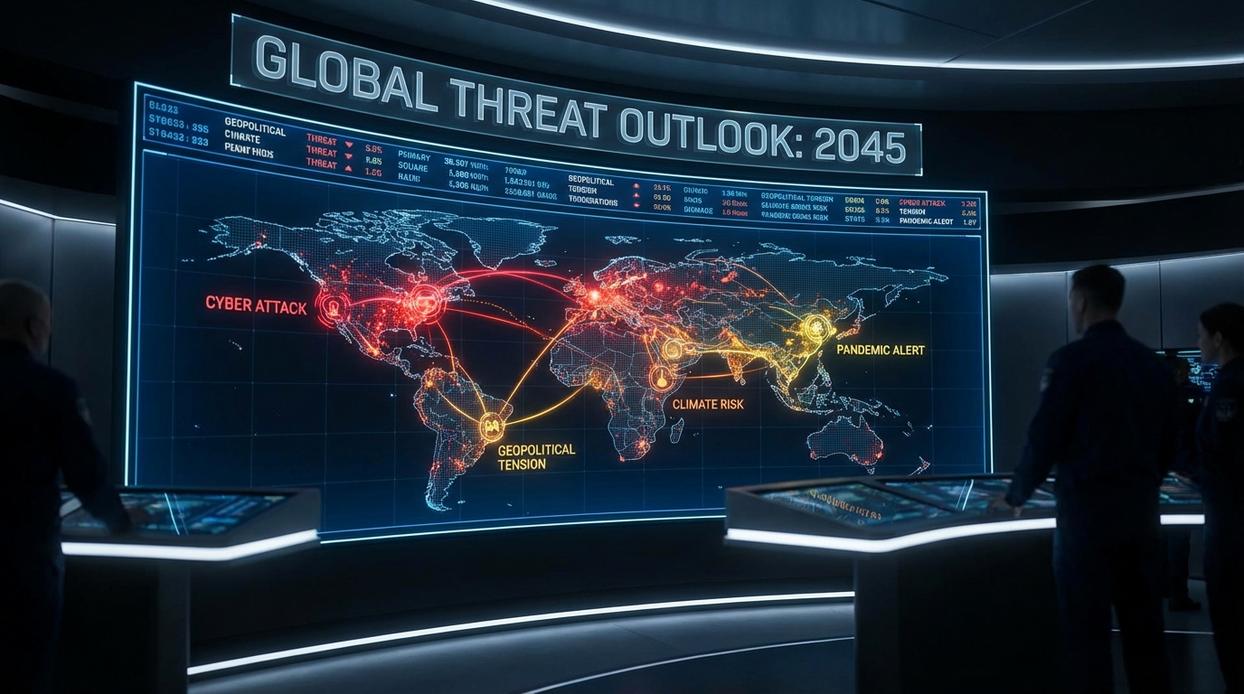
Meanwhile, the explosion of edge computing—processing data closer to where it’s generated—has widened the attack surface. Edge nodes and Internet of Things (IoT) devices, from smart thermostats to industrial sensors, often ship with weak credentials or outdated firmware. Critics argue that segmentation and zero-trust architectures reduce this risk. They help, certainly. Yet poorly secured devices still form botnets, massive networks of hijacked machines used for distributed denial-of-service attacks (CISA, 2023). One compromised camera can become a doorway into a corporate network. Transitioning to smart infrastructure without embedded security is like installing high-tech locks on a glass door. Pro tip: inventory every connected device before scaling deployments.
The Quantum Threat
Looking further ahead, quantum computing poses a subtler danger. Quantum machines exploit quantum bits, or qubits, which can represent multiple states simultaneously. Skeptics note that practical, large-scale quantum computers remain years away. True—but adversaries don’t need them today. The “harvest now, decrypt later” strategy means attackers are already capturing encrypted traffic, betting future quantum systems will break current standards like RSA and ECC (NIST, 2024). Sensitive intellectual property and state secrets are prime targets. Organizations debating priorities should consider how tech leaders make strategic innovation decisions: https://doxfore5.com/how-tech-leaders-make-strategic-innovation-decisions/.
Your Proactive Playbook: An Actionable Threat Forecasting Model
Step 1: Curate High-Fidelity Threat Intelligence
Generic headlines won’t save you (they barely explain what happened yesterday). High-fidelity threat intelligence means collecting actionable data about adversary TTPs—tactics, techniques, and procedures, or the specific ways attackers operate. Blend open-source intelligence (OSINT), commercial feeds, and vetted dark web monitoring to see what’s actually unfolding. Many competitors stop at surface-level reporting; the real edge comes from correlating intelligence across sources to validate patterns. Pro tip: prioritize feeds that map directly to MITRE ATT&CK techniques so your teams can operationalize insights immediately.
Step 2: Implement Continuous Attack Simulation
Knowing the threat is one thing. Testing your defenses against it is another. Red teaming (authorized experts simulating real attackers) and Breach and Attack Simulation (BAS) platforms let you pressure-test systems safely. BAS tools automate thousands of attack permutations, measuring detection and response gaps in real time. While others treat testing as an annual compliance checkbox, continuous simulation transforms cybersecurity threat forecasts into measurable resilience benchmarks. Think of it as a fire drill for your digital infrastructure (minus the awkward parking lot gathering).
- Run quarterly red team exercises aligned to emerging TTPs
- Integrate BAS results into SOC performance metrics
- Update playbooks based on observed detection delays
Step 3: Analyze Attacker Chatter and Motivation
Underground forums reveal what criminals value, what exploits are trending, and which sectors are being targeted next. Monitoring attacker chatter uncovers intent before execution. If ransomware groups pivot toward edge devices or supply chains, that’s predictive insight—not trivia. Most analyses report breaches after impact; studying motivation helps forecast impact. In short, follow the incentives, and you’ll often find the next attack vector before it finds you.
Start with an anecdote about watching a small breach spiral into a weeklong fire drill: a single phishing email slipped past our filters, and suddenly we were reacting, not leading. That moment taught me a hard truth: building higher digital walls is useless if you cannot see what’s coming.
Today, the landscape shifts faster than most teams can patch, and reactive security guarantees you stay one step behind. Some argue that strong firewalls and annual audits are enough. I disagree. Adversaries iterate daily, leveraging AI, edge devices, and probing emerging quantum risks.
Instead, lean into forecasting. By studying cybersecurity threat forecasts and aligning investments around AI-driven detection, edge visibility, and quantum-resilient encryption, you shift from target to prepared defender. Think of it less “Fortress Mode” and more “Minority Report.”
So, start today: curate one high-quality threat intelligence feed, review it weekly, and build from there toward a resilient, forward-looking posture.
Stay Ahead of What’s Coming Next
You set out to understand where technology is heading—and now you have a clearer view of the innovations, smart devices, edge computing shifts, and productivity strategies shaping tomorrow’s digital landscape.
But the real challenge isn’t knowing what’s trending. It’s keeping up before disruption hits your workflow, your systems, or your security posture. Falling behind means lost efficiency, increased risk, and missed competitive advantages.
That’s why staying informed on cybersecurity threat forecasts and emerging tech signals isn’t optional—it’s essential. The faster you adapt, the stronger and more resilient your strategy becomes.
If you’re ready to stay ahead instead of scrambling to catch up, subscribe now for real-time innovation alerts, practical tech breakdowns, and actionable productivity insights. Join thousands of forward-thinking professionals who rely on us as a top-rated source for clear, no-fluff technology intelligence—and start making smarter tech decisions today.
 Founder & Chief Innovation Officer
There is a specific skill involved in explaining something clearly — one that is completely separate from actually knowing the subject. Ythran Draymond has both. They has spent years working with innovation alerts in a hands-on capacity, and an equal amount of time figuring out how to translate that experience into writing that people with different backgrounds can actually absorb and use.
Ythran tends to approach complex subjects — Innovation Alerts, Smart Devices and Solutions, Tech Landscapes and Trends being good examples — by starting with what the reader already knows, then building outward from there rather than dropping them in the deep end. It sounds like a small thing. In practice it makes a significant difference in whether someone finishes the article or abandons it halfway through. They is also good at knowing when to stop — a surprisingly underrated skill. Some writers bury useful information under so many caveats and qualifications that the point disappears. Ythran knows where the point is and gets there without too many detours.
The practical effect of all this is that people who read Ythran's work tend to come away actually capable of doing something with it. Not just vaguely informed — actually capable. For a writer working in innovation alerts, that is probably the best possible outcome, and it's the standard Ythran holds they's own work to.
Founder & Chief Innovation Officer
There is a specific skill involved in explaining something clearly — one that is completely separate from actually knowing the subject. Ythran Draymond has both. They has spent years working with innovation alerts in a hands-on capacity, and an equal amount of time figuring out how to translate that experience into writing that people with different backgrounds can actually absorb and use.
Ythran tends to approach complex subjects — Innovation Alerts, Smart Devices and Solutions, Tech Landscapes and Trends being good examples — by starting with what the reader already knows, then building outward from there rather than dropping them in the deep end. It sounds like a small thing. In practice it makes a significant difference in whether someone finishes the article or abandons it halfway through. They is also good at knowing when to stop — a surprisingly underrated skill. Some writers bury useful information under so many caveats and qualifications that the point disappears. Ythran knows where the point is and gets there without too many detours.
The practical effect of all this is that people who read Ythran's work tend to come away actually capable of doing something with it. Not just vaguely informed — actually capable. For a writer working in innovation alerts, that is probably the best possible outcome, and it's the standard Ythran holds they's own work to.