
Innovation is moving faster than most teams can track it. If you’re searching for clear, actionable insights on emerging tech trends, smart devices, edge computing, and real-world edge ai applications, this article is built for you. The goal is simple: cut through the noise and highlight what actually matters—what’s scalable, what’s practical, and what’s worth your attention right now.
Many professionals struggle to separate hype from meaningful breakthroughs. With constant product launches, evolving tech landscapes, and shifting productivity tools, it’s easy to miss the developments that can truly create leverage. This piece brings together trend analysis, expert commentary, and validated industry data to give you a grounded view of where innovation is heading.
We’ve analyzed current market signals, reviewed technical documentation, and referenced insights from leading engineers and technology researchers to ensure accuracy and relevance. By the end, you’ll have a sharper understanding of key trends, emerging solutions, and how to apply them strategically in your work or business.
Bringing Intelligence Closer
Cloud AI can feel like streaming a movie on bad Wi‑Fi—powerful, yet buffering at the worst moment. Edge AI moves computation onto devices themselves, cutting latency (delay between input and response), bandwidth costs, and privacy risks.
Across manufacturing, cameras detect defects instantly. In healthcare, wearables flag anomalies without sending raw data to distant servers. Retailers personalize offers in real time.
These edge ai applications reduce reliance on constant connectivity.
- Pro tip: start with high-latency pain points first.
What’s next? Expect tighter chips, smarter models, and hybrid cloud‑edge stacks that balance speed with scale. Soon, everywhere adapts.
Core Concepts: Why Local AI Processing is a Game-Changer
First, let’s define Edge AI. It simply means running artificial intelligence directly on a device—like a camera, sensor, or smartphone—instead of sending data off to a distant cloud server. In other words, the brain lives inside the gadget (yes, your camera just got smarter).
So why does this matter? Let’s break it down:
- Speed (Low Latency): Decisions happen in milliseconds. For autonomous cars or factory robots, that’s the difference between smooth operation and a very expensive “oops.”
- Cost & Bandwidth: Instead of streaming mountains of data 24/7, devices process it locally, cutting cloud costs dramatically.
- Privacy & Security: Sensitive video or health data stays on-site, reducing exposure risks (and headaches for IT teams).
- Reliability: Even if the internet drops, edge ai applications keep running without drama.
Of course, some argue cloud AI is more scalable. Fair point. However, when speed, privacy, and uptime matter, local processing often wins—quietly and efficiently.
Application 1: The Smart Factory and Industrial Automation
To begin with, the smart factory isn’t just a buzzword—it’s a shift in how machines think, react, and even “anticipate” problems. Consider predictive maintenance, where AI models analyze vibration and temperature data from embedded sensors in real time. Instead of waiting for a motor to fail (and halt production like a domino chain), the system flags anomalies early. Some critics argue this is expensive overengineering. After all, routine maintenance schedules have worked for decades. However, unplanned downtime can cost manufacturers thousands per minute (according to Deloitte), making prediction far cheaper than reaction.
Next, automated quality control uses high-speed cameras paired with edge ai applications to detect microscopic defects instantly. Unlike human inspectors—who fatigue over time—these systems maintain precision 24/7. Detractors worry about job displacement. Yet in practice, many factories redeploy workers to higher-skill oversight roles (pro tip: companies that reskill teams see smoother tech adoption).
Finally, worker safety monitoring systems identify missing hard hats or hazardous zone breaches in seconds. While privacy concerns are valid, properly configured systems focus on compliance signals, not personal surveillance. Think less “Big Brother,” more Iron Man’s suit quietly running diagnostics in the background (minus the explosions).
Application 2: Transforming Retail and Customer Experiences

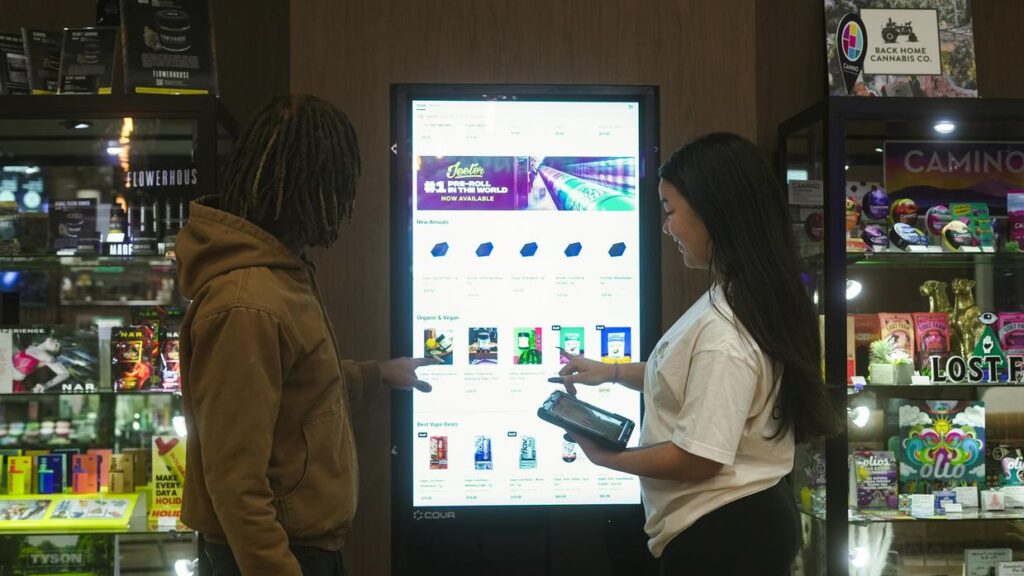
Retail has always chased one goal: make buying easier. Now, edge computing is quietly rewriting how that happens.
Frictionless Checkout
First, consider frictionless checkout. In-store cameras and sensors process selections locally, enabling “just walk out” experiences without streaming sensitive footage to the cloud. This local processing—often powered by edge ai applications—reduces latency (delay in data transfer) and limits exposure of personally identifiable information (PII), meaning data that could identify a specific individual. While some critics argue these systems still raise privacy concerns, the reality is more nuanced. When video is analyzed on-premise and not stored centrally, risk is significantly reduced—though, admittedly, no system is ever zero-risk.
Real-Time Inventory Management
Meanwhile, smart shelves use embedded sensors to track stock levels instantly. If inventory drops below a preset threshold, staff receive alerts before shelves sit empty (because nothing kills momentum like an “out of stock” sign). That said, smaller retailers may question implementation costs. Fair point. ROI depends heavily on store size and turnover rates.
In-Store Analytics
Finally, anonymous foot-traffic analysis helps optimize layout by measuring dwell time—how long shoppers linger in specific areas. Insights like these mirror patterns seen in broader industry use cases edge computing in healthcare and manufacturing.
Pro tip: Pilot in one location before scaling chain-wide to validate performance and customer response.
Application 3: Intelligent Vehicles and Smart Cities
Let’s start with autonomous driving. We’ve all sat in traffic watching someone drift lanes while staring at their phone (terrifying, right?). Autonomous vehicles promise to remove that human error. But here’s the catch: they can’t afford hesitation. A car must detect pedestrians, cyclists, and sudden obstacles instantly. That’s where edge AI—artificial intelligence that processes data directly on the device instead of relying on distant servers—becomes critical. If a vehicle had to “phone home” to the cloud before braking, the delay could be catastrophic. Split-second, on-device decisions aren’t optional; they’re survival.
Meanwhile, intelligent traffic management tackles another daily frustration: endless red lights when no one’s even crossing. AI-enabled cameras analyze traffic flow in real time and dynamically adjust signals. As a result, congestion eases and emergency vehicles move faster. No more waiting three cycles because timing plans were set five years ago.
Then there’s public utility monitoring. Few things are more irritating than unexpected outages or flooded streets from burst pipes. Edge AI sensors detect anomalies instantly, preventing small issues from snowballing. These edge ai applications don’t just add convenience—they reduce the headaches cities and citizens constantly battle.
I remember the first time my smart doorbell lagged during a package delivery; by the time the video loaded from the cloud, the driver was already gone. That small frustration perfectly captures why local processing matters. Edge ai applications deliver speed, privacy, and reliability because data is handled directly on the device instead of traveling miles to a server farm. In other words, decisions happen instantly (which, in tech, feels like a superpower).
The core challenge they solve is simple: centralized cloud systems struggle with time‑sensitive tasks. Whether it’s autonomous braking in cars or real‑time health monitoring, milliseconds matter.
However, the road ahead isn’t frictionless. Developers must shrink complex AI models to fit low‑power chips, and hardware standards still vary widely. Even so, as IoT devices multiply in homes, factories, and cities, demand for efficient, on‑device intelligence will only accelerate. The future, quite literally, is local.
Stay Ahead of the Next Wave in Edge Innovation
You came here to understand how emerging technologies, smarter devices, and edge ai applications are reshaping the way we work and build. Now you have a clearer view of the trends driving edge computing, the practical solutions available today, and how these innovations translate into real productivity gains.
The reality is that falling behind on edge advancements means missed efficiency, slower decision-making, and competitors gaining ground with smarter systems. In a landscape that moves this fast, outdated insights cost time and opportunity.
The smartest move you can make now is to stay consistently informed and act on what matters. Start tracking breakthrough edge ai applications, adopt tools that streamline your workflows, and apply the productivity hacks that turn insights into execution.
If you’re ready to cut through the noise and stay ahead of the tech curve, join thousands of forward-thinking professionals who rely on our innovation alerts and in-depth edge insights. Subscribe now and get real-time updates that help you work smarter, move faster, and lead with confidence.
 Content & Productivity Strategist
Ask Jimmy Fowlericimo how they got into doxfore edge computing insights and you'll probably get a longer answer than you expected. The short version: Jimmy started doing it, got genuinely hooked, and at some point realized they had accumulated enough hard-won knowledge that it would be a waste not to share it. So they started writing.
What makes Jimmy worth reading is that they skips the obvious stuff. Nobody needs another surface-level take on Doxfore Edge Computing Insights, Expert Insights, Innovation Alerts. What readers actually want is the nuance — the part that only becomes clear after you've made a few mistakes and figured out why. That's the territory Jimmy operates in. The writing is direct, occasionally blunt, and always built around what's actually true rather than what sounds good in an article. They has little patience for filler, which means they's pieces tend to be denser with real information than the average post on the same subject.
Jimmy doesn't write to impress anyone. They writes because they has things to say that they genuinely thinks people should hear. That motivation — basic as it sounds — produces something noticeably different from content written for clicks or word count. Readers pick up on it. The comments on Jimmy's work tend to reflect that.
Content & Productivity Strategist
Ask Jimmy Fowlericimo how they got into doxfore edge computing insights and you'll probably get a longer answer than you expected. The short version: Jimmy started doing it, got genuinely hooked, and at some point realized they had accumulated enough hard-won knowledge that it would be a waste not to share it. So they started writing.
What makes Jimmy worth reading is that they skips the obvious stuff. Nobody needs another surface-level take on Doxfore Edge Computing Insights, Expert Insights, Innovation Alerts. What readers actually want is the nuance — the part that only becomes clear after you've made a few mistakes and figured out why. That's the territory Jimmy operates in. The writing is direct, occasionally blunt, and always built around what's actually true rather than what sounds good in an article. They has little patience for filler, which means they's pieces tend to be denser with real information than the average post on the same subject.
Jimmy doesn't write to impress anyone. They writes because they has things to say that they genuinely thinks people should hear. That motivation — basic as it sounds — produces something noticeably different from content written for clicks or word count. Readers pick up on it. The comments on Jimmy's work tend to reflect that.