
Technology is evolving faster than most professionals can keep up with. From emerging tech landscapes to smarter devices and edge computing breakthroughs, staying informed is no longer optional—it’s essential for making better decisions in work and business. If you’re searching for clear, actionable insights on the latest innovations and practical ways to apply them, this article delivers exactly that.
We break down the trends shaping today’s digital environment, highlight the tools redefining productivity, and share digital productivity hacks that help you work smarter—not longer. Our analysis is grounded in ongoing monitoring of industry developments, product releases, and real-world performance data, ensuring you get insights that are timely, relevant, and practical.
Whether you’re exploring new smart solutions, optimizing workflows, or trying to understand where technology is heading next, this guide provides focused, trustworthy insights to help you stay ahead.
Constant pings, endless tabs, and algorithm-driven feeds have rewired the modern workday. You feel busy, but meaningful progress slips away. That cognitive overload isn’t a personal failure; it’s system failure.
Many productivity guides offer tips. We built and stress-tested a complete operating system after analyzing hundreds of frameworks and tools. Here’s what others miss:
- Design your environment before you design your schedule.
- Audit notifications weekly (yes, weekly).
- Apply digital productivity hacks intentionally, not reactively.
It’s less about willpower and more about architecture. Reclaim focus, reduce friction, and produce work that actually matters. Start today, and guard your attention fiercely. No excuses.
The Foundation: Architecting Your Digital Mindset
Embrace Digital Minimalism
Digital minimalism is the practice of using the smallest number of digital tools necessary to achieve your goals. It’s not anti-technology; it’s anti-distraction. Think of it like a capsule wardrobe, but for apps (yes, you probably don’t need 12 messaging platforms). The aim is intentionality—choosing tools that serve you, not the other way around. Some argue that more tools equal more opportunity. That sounds logical. But in reality, every new app adds cognitive overhead—updates, notifications, logins, mental clutter. My prediction? As tech ecosystems expand, digital minimalism will shift from niche philosophy to survival skill.
Mastering Deep Work
Deep work refers to uninterrupted, cognitively demanding focus sessions. Cal Newport’s research suggests focused work produces significantly higher output than fragmented attention (Newport, Deep Work, 2016). Try this 3-step method:
- Schedule: Block 60–90 minutes on your calendar.
- Isolate: Silence devices and close unrelated tabs.
- Execute: Work on one clearly defined task only.
Pro tip: Treat the block like a meeting with your future self (because it is).
The ‘Single-Tasking’ Imperative
Multitasking is largely a myth. Studies from Stanford University found heavy multitaskers perform worse on memory and attention tasks (Ophir et al., 2009). Context-switching is like forcing your brain to reboot every few minutes—productive in theory, chaotic in practice. Yet some insist multitasking is a modern necessity. I’d speculate the opposite: in an AI-saturated future, the rare skill will be sustained human focus.
Actionable Step
Perform a 24-hour notification audit. Disable all non-essential alerts on your phone and computer. Notice what breaks—and what doesn’t. Many digital productivity hacks start with subtraction, not addition.
Your Tech Stack: Tools That Serve, Not Submerge
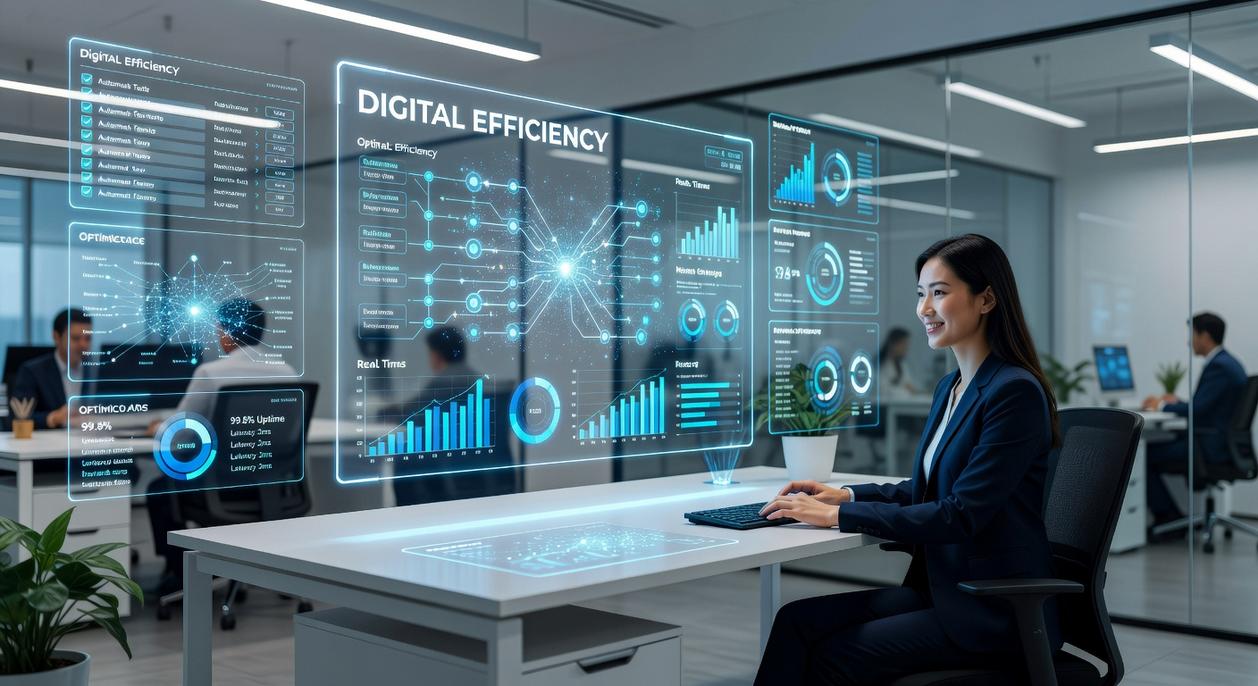
A productive tech stack should feel like a calm command center—not Times Square at rush hour. Here’s what I recommend.
The Central Hub
Start with one unified task manager like Todoist or Things 3. A central hub is a single trusted system where every task lives. The rule is simple: get it out of your head. This principle means capturing tasks immediately instead of mentally juggling them (your brain is for thinking, not storage). Research in cognitive psychology shows that unfinished tasks create mental tension known as the Zeigarnik Effect (Baumeigster & Masicampo, 2011). Writing them down reduces that load.
My advice: pick one app and commit for 30 days. No hopping.
The Second Brain
Next, build a “Second Brain”—a dedicated note-taking system like Obsidian or Notion. A Second Brain is a digital repository for ideas, meeting notes, and long-term knowledge.
Differentiate between fleeting notes (quick thoughts, rough ideas) and permanent notes (refined insights you’ll reuse). Fleeting notes are messy; permanent notes are organized and linked. Think of it like turning sticky notes into a searchable library (very less “detective wall with red string”).
Pro tip: Schedule a 15-minute weekly review to upgrade fleeting notes into permanent ones.
Leveraging Automation and AI
Automation tools like IFTTT or Zapier handle repetitive digital chores. For example:
- Automatically archive newsletters into a labeled email folder.
- Use an AI tool to generate meeting summaries and action items instantly.
If you’re serious about reclaiming time, read how automation tools can save you 10 hours a week.
These small systems compound. That’s the essence of digital productivity hacks.
Smart Device Integration
Finally, integrate smart speakers or displays. Use voice commands to set focus timers, check calendars, or capture notes. The goal is simple: stay off your phone’s main screen. Fewer distractions. More intention.
Choose tools that serve you. If they create friction, cut them.
The Engine: Building a High-Output Daily Workflow
A powerful workflow isn’t about working longer. It’s about building an engine that runs smoothly every day (even when your motivation doesn’t).
Time Blocking and Day Theming
Time blocking means assigning specific hours to specific tasks. Instead of reacting to your inbox, you follow a pre-decided plan.
| Time | Task |
|————–|———————–|
| 8:00–9:00 AM | Planning & priorities |
| 9:00–11:00 AM| Deep work |
| 11:00–12:00 | Meetings |
| 1:00–3:00 PM | Creative execution |
| 3:00–4:00 PM | Admin tasks |
Layer in day theming for even more clarity:
- Monday: Planning
- Tuesday: Creative work
- Wednesday: Collaboration
- Thursday: Strategy
- Friday: Review & optimization
The benefit? Less decision fatigue and more momentum (your brain loves knowing what day it is).
The Pomodoro Technique, Modernized
The classic formula: 25 minutes of focused work, 5-minute break. But here’s the twist—during those five minutes, don’t check your phone. Instead:
- Stretch
- Hydrate
- Step outside or look out a window
This protects your attention span and boosts sustained output. Tiny resets compound into serious gains.
The Two-Minute Rule
If something takes less than two minutes, do it immediately. Reply. File it. Schedule it. This prevents micro-tasks from clogging your mental bandwidth.
The Digital Shutdown Ritual
Spend 15 minutes to:
- Close all tabs
- Review tomorrow’s schedule
- Clear your task list
This creates a psychological boundary between work and life. The payoff? Better sleep, sharper mornings, and consistent execution.
Master these systems and you’re not just trying productivity tips—you’re building an engine powered by digital productivity hacks that actually scale.
From Overwhelmed to In Control
You came here because your day felt like a browser with 47 tabs open, music auto‑playing somewhere, and no idea which tab is making the noise. Now you have a complete framework—Mindset, Tools, Workflow—to close the loops.
That frustration, that constant ping of distraction, wasn’t laziness. It was a system glitch. This works because it fixes the wiring, not just the warning lights.
Think of it as cleaning your digital desk before buying another drawer organizer.
Start small. Choose one move—like a notification audit or the two-minute rule—and use digital productivity hacks today. Momentum compounds.
Stay Ahead of the Curve and Take Control of Your Tech Future
You came here to better understand today’s fast-moving tech landscape—innovation alerts, edge computing shifts, smarter devices, and the strategies that actually improve how you work. Now you have a clearer view of where technology is heading and how it directly impacts your productivity and decision-making.
The real challenge isn’t access to information—it’s keeping up without feeling overwhelmed or falling behind competitors who adopt smarter systems faster. Ignoring emerging trends or failing to implement practical digital productivity hacks can quietly cost you time, efficiency, and opportunity.
Act now. Start applying what you’ve learned—streamline your workflows, evaluate smarter device integrations, and explore edge-ready solutions that give you speed and flexibility. If you’re serious about staying competitive, subscribe for real-time innovation alerts and actionable insights trusted by forward-thinking professionals. Join thousands of readers who rely on our tech breakdowns to simplify complexity and turn insight into action.
Don’t just watch the future unfold—optimize for it today.